
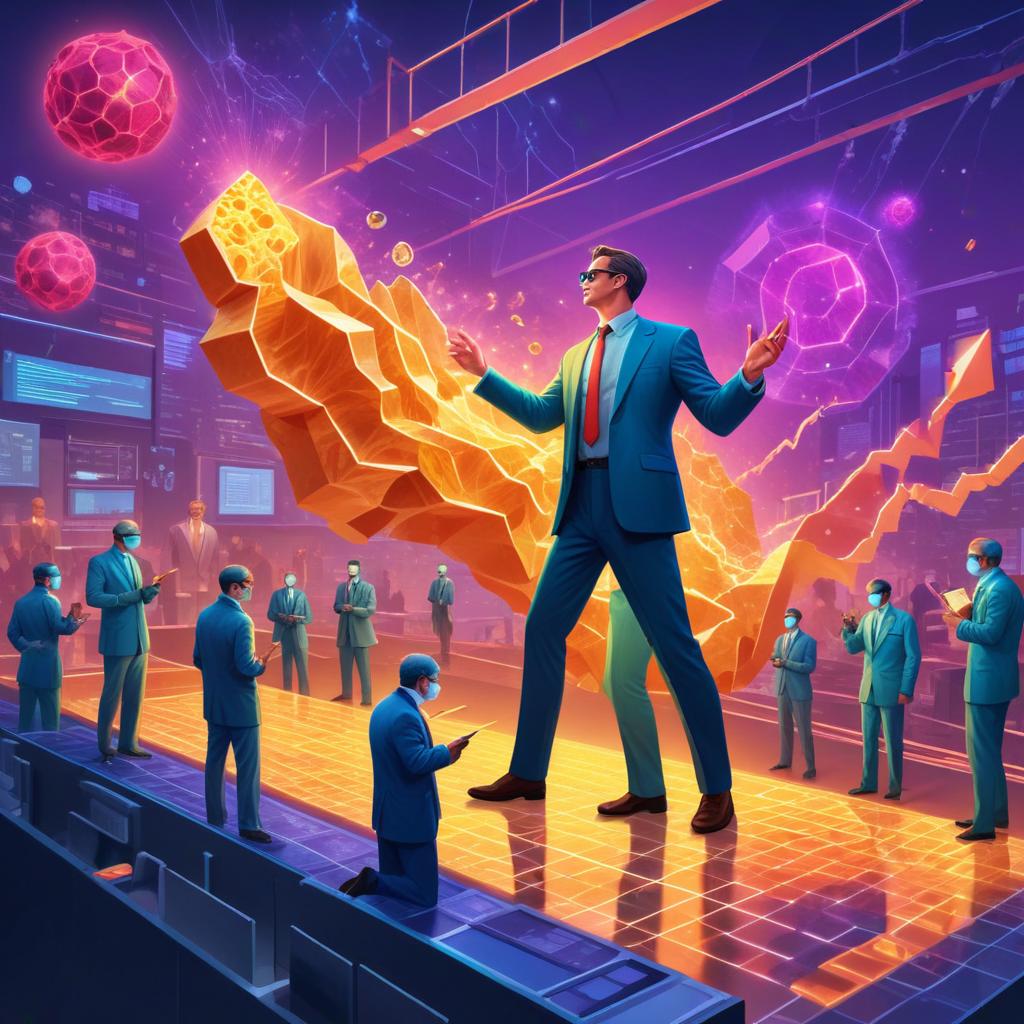
Gaming Transformed: Blockchain‘s Forging of True Digital Ownership
Gaming Transformed: Blockchain’s Forging of True Digital Ownership
The gaming landscape has undergone a seismic shift in recent years, largely fueled by the integration of blockchain technology. No longer are in-game assets confined to the walled gardens of individual game developers. Instead, blockchain is paving the way for true digital ownership, empowering players and reshaping the very foundation of gaming economies. As we stand in 2025, the implications of this transformation are profound and far-reaching.
Non-fungible tokens (NFTs) have emerged as the cornerstone of blockchain-integrated gaming. These unique, indivisible tokens represent ownership of in-game items, characters, land, and other Digital Assets. This fundamental shift from centralized control to decentralized ownership has several significant consequences:
Player Empowerment and Asset Portability
Players now possess verifiable ownership of their in-game investments. Unlike traditional gaming models, where assets are tied to a specific game and can be revoked or altered at the developer’s discretion, NFTs grant players complete control. This ownership extends beyond a single game, allowing for asset portability across different games and metaverses. Imagine owning a legendary sword earned in one game and using it in another, or selling it on a decentralized marketplace for real-world value. This interoperability is becoming increasingly common, thanks to standardized NFT protocols and cross-game compatibility initiatives spearheaded by industry consortia.
New Revenue Streams for Players
The play-to-earn (P2E) model, popularized by games like Axie Infinity, has demonstrated the potential for players to generate income through their gaming activities. By participating in gameplay, completing quests, or contributing to the game’s ecosystem, players can earn NFTs or Cryptocurrency tokens. These assets can then be traded on exchanges or used to acquire more powerful in-game items. While early P2E models faced criticisms regarding sustainability and economic imbalances, refined tokenomics and innovative game mechanics are addressing these challenges. We’re seeing the rise of “play-and-earn” models that prioritize engaging gameplay alongside earning opportunities, ensuring a more balanced and sustainable ecosystem.
Enhanced Community Engagement
Blockchain technology facilitates the creation of stronger and more engaged communities around games. Tokenized communities allow players to participate in governance decisions, influence game development, and share in the economic success of the game. DAOs (Decentralized Autonomous Organizations) are increasingly being used to manage game economies and distribute rewards, empowering players and fostering a sense of ownership and collaboration.
Tokenomics and Sustainable Game Economies
The success of blockchain-integrated games hinges on well-designed tokenomics – the economic principles governing the creation, distribution, and use of tokens within the game’s ecosystem. Poorly designed tokenomics can lead to inflation, devaluation of assets, and ultimately, the collapse of the game’s economy.
Balancing Supply and Demand
A crucial aspect of tokenomics is managing the supply and demand of in-game tokens and NFTs. Mechanisms such as token burning (permanently removing tokens from circulation), staking (locking up tokens to earn rewards), and dynamic reward systems are employed to maintain a healthy balance. Games are increasingly leveraging AI-powered algorithms to dynamically adjust reward rates and resource distribution based on real-time economic conditions, preventing imbalances and ensuring long-term sustainability.
Incentivizing Positive Behavior
Tokenomics can be used to incentivize positive player behavior and discourage negative actions. For example, players might be rewarded for contributing to the game’s community, completing challenging quests, or providing valuable feedback. Conversely, penalties can be imposed for cheating, exploiting bugs, or engaging in disruptive behavior. The use of Soulbound Tokens (SBTs), non-transferable tokens representing a player’s reputation and achievements, is becoming increasingly prevalent in combating malicious activities and fostering a more trustworthy gaming environment.
Integrating with DeFi
Decentralized Finance (DeFi) protocols are increasingly being integrated into gaming economies, offering players new ways to earn yield on their in-game assets. Players can lend their NFTs to other players, provide liquidity to decentralized exchanges (DEXs) using in-game tokens, or participate in yield farming activities. This integration not only provides additional earning opportunities but also enhances the liquidity and utility of in-game assets.
Challenges and Opportunities
Despite the immense potential of blockchain in gaming, several challenges remain:
Scalability and Transaction Fees
High transaction fees and slow transaction speeds on some blockchain networks can hinder the user experience, especially for games with frequent in-game transactions. Layer-2 scaling solutions, such as rollups and sidechains, are being widely adopted to address these scalability issues. Furthermore, the development of blockchain-agnostic gaming platforms allows developers to choose the most suitable blockchain network based on their specific needs and requirements.
User Experience and Onboarding
The complexity of blockchain technology can be daunting for new players. Simplifying the onboarding process, providing intuitive user interfaces, and offering educational resources are crucial for mass adoption. Abstracting away the technical complexities of blockchain through user-friendly wallets and seamless integration with existing gaming platforms is paramount.
Regulation and Legal Compliance
The regulatory landscape surrounding blockchain gaming is still evolving. Navigating the complexities of regulations related to cryptocurrency, NFTs, and gambling is essential for developers to ensure legal compliance. Collaborating with legal experts and engaging with regulatory bodies is crucial for fostering a responsible and sustainable blockchain gaming ecosystem.
Evolving Landscape of Game Development
Developing blockchain-based games requires a different skillset compared to traditional game development. Developers need to understand blockchain technology, smart contracts, and tokenomics. The emergence of specialized blockchain gaming development tools and platforms is simplifying the development process and making it more accessible to developers of all skill levels. Furthermore, the rise of AI-assisted game development tools is accelerating the creation of high-quality blockchain games.
Looking Ahead: The Future of Blockchain Gaming
The integration of blockchain technology into gaming is still in its early stages, but the potential for innovation is immense. We can expect to see further advancements in areas such as:
Metaverse Integration
The metaverse, a persistent, shared virtual world, provides a natural environment for blockchain-integrated gaming. NFTs can represent ownership of virtual land, avatars, and other metaverse assets, creating a vibrant and interconnected economy. Games within the metaverse will offer seamless interoperability, allowing players to move their assets and identities across different virtual worlds. The development of open metaverse standards will further enhance interoperability and create a more unified and immersive experience.
AI-Powered Gaming Experiences
Artificial intelligence (AI) will play an increasingly important role in blockchain gaming. AI can be used to create more dynamic and engaging game worlds, personalize gameplay experiences, and detect and prevent cheating. AI-powered NPCs (Non-Player Characters) can interact with players in more realistic and meaningful ways, creating a more immersive and engaging gaming experience. Furthermore, AI can be used to analyze player behavior and optimize game economies, ensuring long-term sustainability.
Decentralized Gaming Platforms
Decentralized gaming platforms will provide developers with greater control over their games and revenue streams. These platforms will operate on blockchain technology, allowing developers to bypass traditional gatekeepers and directly connect with players. Decentralized distribution models will enable developers to earn a larger share of revenue and foster a more transparent and equitable gaming ecosystem. The use of smart contracts will automate royalty payments and ensure that developers are fairly compensated for their work.
Blockchain’s impact on gaming is undeniable. It’s not just about adding cryptocurrency or NFTs; it’s about fundamentally reshaping the power dynamics within the industry, empowering players, and creating new opportunities for innovation and growth. As technology continues to evolve, blockchain gaming is poised to become an integral part of the broader metaverse and the future of digital entertainment.
You Might Also Like
- Bio-Integrated Art: Where Biology Meets the Printer
- The Sensor Revolution: Accuracy and Depth of Data
- Emulation Evolved: Beyond Basic ROMs
- The Promises of Ultra-Fast Connectivity: More Than Just Speed
- The Rise of Domain-Specific Architectures
Frequently Asked Questions (FAQ)
What exactly *is* an NFT-based economy?
It's an economic system where NFTs (Non-Fungible Tokens) represent ownership of assets and value, enabling new forms of trade, investment, and community building around digital and real-world items.
How are NFTs creating new economic opportunities?
NFTs allow creators to directly monetize their work, provide verifiable scarcity for digital goods, and enable fractional ownership, opening doors for artists, collectors, and investors.
What are the risks associated with NFT economies?
Risks include market volatility, regulatory uncertainty, security vulnerabilities (like scams and hacks), and the potential for environmental impact depending on the underlying blockchain's energy consumption.


