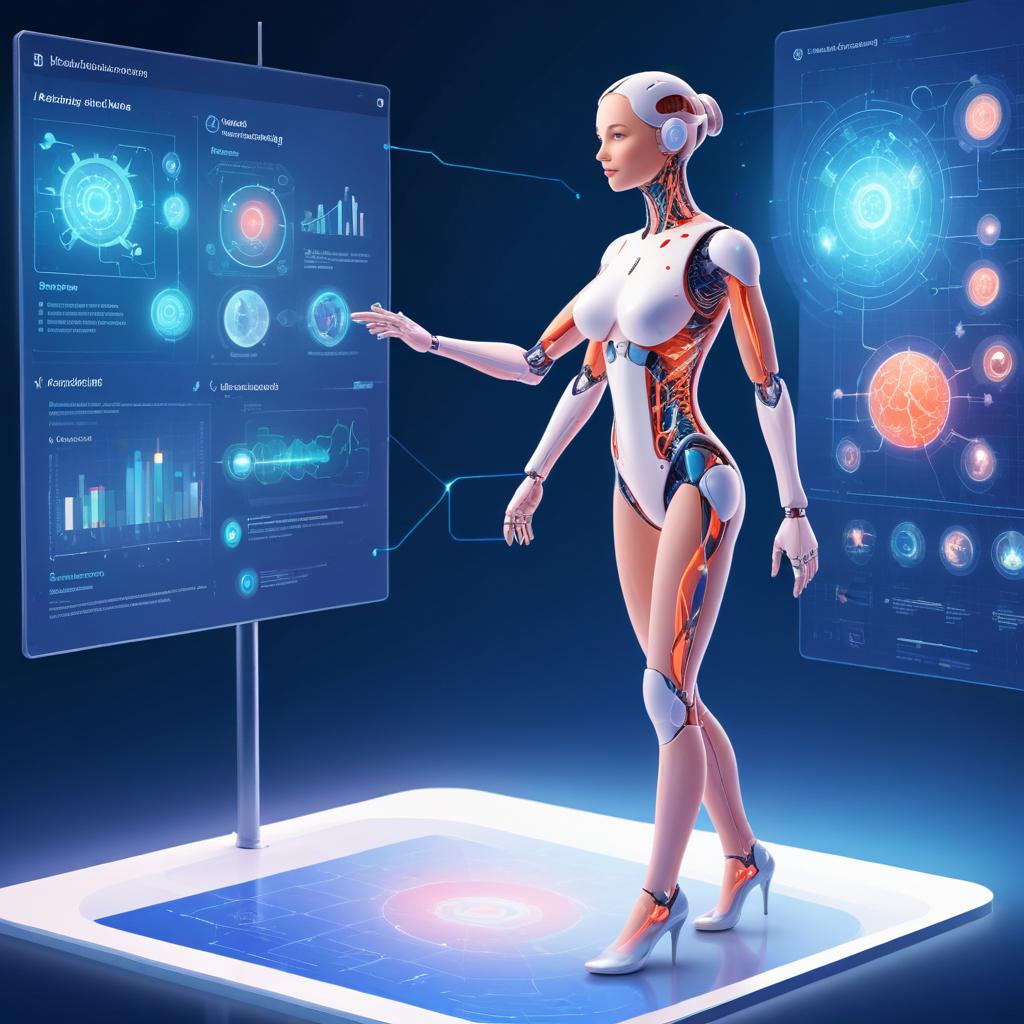
Boosting Business Agility: Practical Applications of AI-Powered Tools in 2025
Boosting Business Agility: Practical Applications of AI-Powered Tools in 2025
By 2025, Artificial Intelligence (AI) has moved beyond the realm of futuristic speculation and become an integral part of everyday business operations. The proliferation of affordable, accessible, and specialized AI tools has empowered businesses of all sizes to enhance efficiency, improve decision-making, and unlock new growth opportunities. This article explores some of the most impactful applications of AI in various business functions, highlighting practical examples and real-world benefits.
Marketing departments are leveraging AI to deliver highly personalized and engaging customer experiences. The days of generic marketing campaigns are long gone, replaced by data-driven strategies that cater to individual preferences and behaviors.
Hyper-Personalized Content Creation with Generative AI
Generative AI models, like advanced versions of GPT-5, are now capable of creating a wide range of marketing content, from blog posts and social media updates to email sequences and even video scripts. These tools analyze vast amounts of data to understand audience demographics, interests, and past interactions, allowing them to generate content that resonates with specific segments. For example, an e-commerce company might use AI to generate different product descriptions for different customer segments, highlighting features that are most relevant to each group. The latest iterations also incorporate real-time feedback loops, continuously learning and improving the quality and effectiveness of the generated content.
Predictive Analytics for Campaign Optimization
AI-powered predictive analytics tools are used to forecast campaign performance and identify opportunities for optimization. By analyzing historical data, these tools can predict which channels are most likely to generate leads, which ad creatives are most effective, and which customer segments are most receptive to specific offers. This allows marketers to allocate their resources more efficiently and maximize their return on investment. For instance, a marketing agency might use AI to predict the optimal time to launch a new product campaign based on historical sales data, competitor activity, and seasonal trends. Furthermore, real-time A/B testing powered by AI allows for dynamic adjustments to campaigns, responding instantly to changing customer behavior.
AI-Driven Chatbots for Enhanced Customer Engagement
AI-powered chatbots are now sophisticated enough to handle complex customer inquiries and provide personalized support 24/7. These chatbots can understand natural language, interpret customer sentiment, and even offer proactive assistance based on individual needs. They can also escalate complex issues to human agents seamlessly, ensuring that customers receive the best possible service. Imagine a customer experiencing a problem with a software product. The AI chatbot can guide them through basic troubleshooting steps, answer frequently asked questions, and even schedule a call with a technical support representative if necessary. Advanced chatbots also integrate with CRM systems, providing agents with a complete view of the customer’s history and interactions.
Revolutionizing Sales with AI-Powered Insights
AI is transforming the sales process by providing sales teams with valuable insights and tools to close more deals, faster.
AI-Powered Lead Scoring and Prioritization
AI algorithms analyze vast amounts of data to identify the most promising leads and prioritize them based on their likelihood of converting into customers. This allows sales teams to focus their efforts on the leads that are most likely to generate revenue, increasing their efficiency and productivity. For example, a B2B software company might use AI to score leads based on their company size, industry, and engagement with marketing materials. Leads with high scores are then prioritized for outreach by the sales team. These systems now incorporate sentiment analysis from social media and news articles to further refine lead scoring.
Intelligent Sales Automation
AI-powered automation tools can automate many of the repetitive tasks that sales teams perform, such as data entry, email follow-up, and appointment scheduling. This frees up sales representatives to focus on building relationships with customers and closing deals. Imagine a sales representative using AI to automatically schedule follow-up calls with leads based on their availability and time zone. The AI can also personalize email templates and track customer interactions, providing valuable insights into their needs and preferences. Integration with collaboration platforms ensures seamless communication between sales teams and other departments.
Predictive Sales Forecasting
AI algorithms can analyze historical sales data, market trends, and other relevant factors to generate accurate sales forecasts. This allows businesses to make informed decisions about inventory management, resource allocation, and growth strategies. A retail company, for example, could use AI to predict the demand for specific products based on seasonal trends, promotional campaigns, and economic indicators. This information can then be used to optimize inventory levels and ensure that products are available when and where customers need them. These forecasts now incorporate real-time data feeds from social media and search trends to anticipate sudden shifts in consumer demand.
Streamlining Operations with AI and Automation
AI is helping businesses to streamline their operations, reduce costs, and improve efficiency across a wide range of functions.
Intelligent Process Automation (IPA)
IPA combines Robotic Process Automation (RPA) with AI capabilities like natural language processing (NLP) and machine learning (ML) to automate complex, end-to-end business processes. This goes beyond simple task automation and enables businesses to automate processes that require human-like intelligence and decision-making. For example, an insurance company could use IPA to automate the claims processing process, from initial claim submission to payment approval. The AI can analyze claim documents, identify potential fraud, and even negotiate settlements with claimants. This significantly reduces processing time and improves accuracy.
Predictive Maintenance
AI-powered predictive maintenance tools can analyze data from sensors and other sources to predict when equipment is likely to fail. This allows businesses to schedule maintenance proactively, preventing costly downtime and extending the lifespan of their assets. A manufacturing plant, for instance, could use AI to monitor the performance of its machinery and identify potential problems before they lead to breakdowns. This allows them to schedule maintenance during off-peak hours, minimizing disruption to production. Advanced systems incorporate digital twins of physical assets to simulate different scenarios and optimize maintenance schedules.
Supply Chain Optimization
AI is used to optimize supply chain operations by predicting demand, managing inventory, and improving logistics. This helps businesses to reduce costs, improve efficiency, and respond quickly to changing market conditions. A food distribution company, for example, could use AI to predict demand for different products based on weather forecasts, seasonal trends, and local events. This information can then be used to optimize inventory levels and ensure that products are delivered to stores in a timely manner. AI-powered logistics platforms also dynamically adjust delivery routes based on real-time traffic conditions and other factors.
Ethical Considerations and Future Trends
While AI offers tremendous opportunities for businesses, it is important to consider the ethical implications of its use. Businesses must ensure that their AI systems are fair, transparent, and accountable. They must also address concerns about data privacy and security. As AI technology continues to evolve, we can expect to see even more innovative applications emerge. Some key trends to watch include the development of more sophisticated AI models, the increasing integration of AI with other technologies like the Internet of Things (IoT) and blockchain, and the growing adoption of AI by small and medium-sized businesses (SMBs).
The future of business is undoubtedly intertwined with AI. By embracing these powerful tools and addressing the associated ethical considerations, businesses can unlock new levels of efficiency, productivity, and growth.
You Might Also Like
- The Rise of Cognitive NPCs: A New Era of Interaction
- The Limits of General-Purpose Computing for AI
- The Technological Foundation: Immersive and Intelligent Learning Environments
- Unlocking the Terahertz Spectrum: The Foundation of 6G
- The Technological Pillars of Cross-Platform Dominance
Frequently Asked Questions (FAQ)
What is AI-Enhanced Marketing Personalization at Scale?
It's using AI to deliver highly customized marketing experiences to a large audience, adapting messages and offers based on individual preferences and behaviors.
How does AI help personalize marketing at scale?
AI analyzes vast amounts of data to identify patterns, predict customer behavior, and automate the creation and delivery of personalized content and offers.
What are the benefits of AI-driven personalized marketing?
Improved customer engagement, higher conversion rates, increased customer loyalty, and more efficient marketing spend are some key benefits.