
Precision Pulse: AI’s Transformation of Hospital Diagnostics
Precision Pulse: AI’s Transformation of Hospital Diagnostics
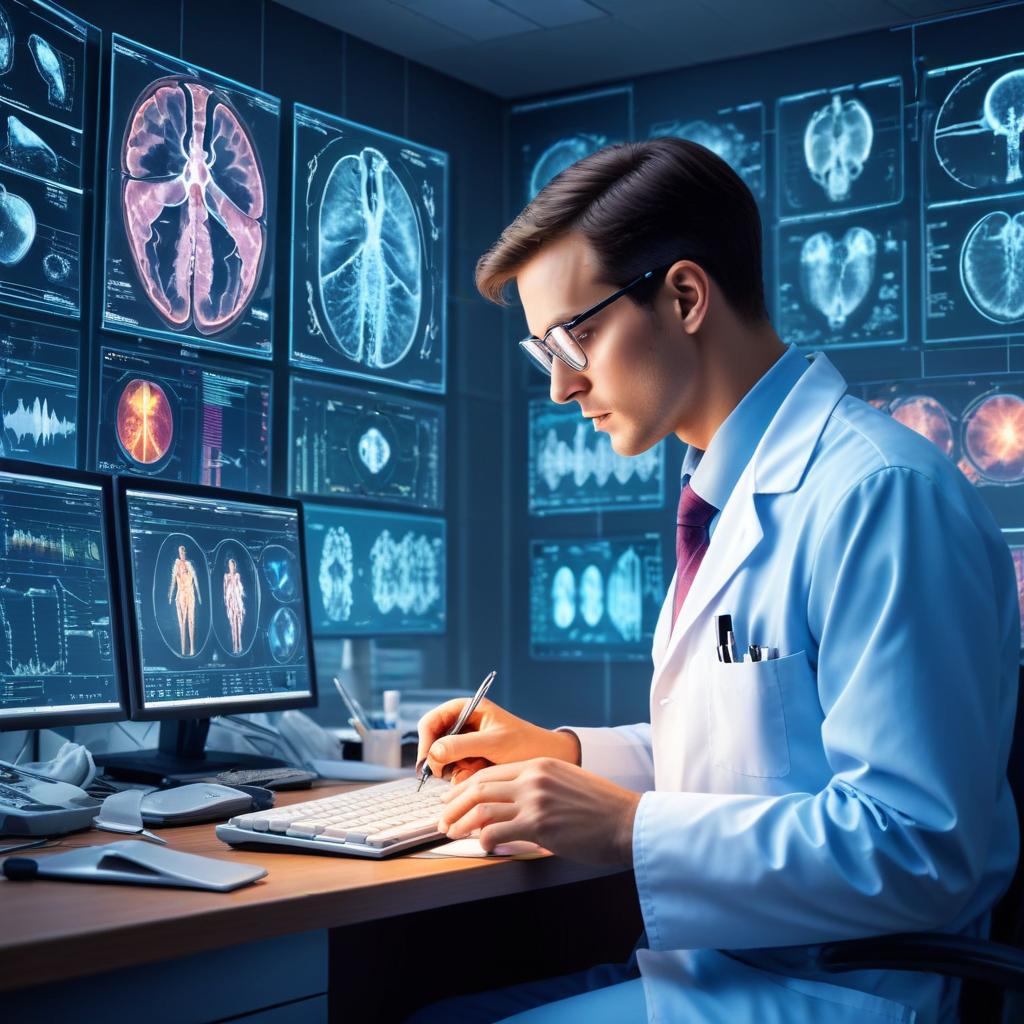
The landscape of hospital diagnostics has undergone a seismic shift in recent years, largely driven by the rapid advancement and integration of artificial intelligence (AI). As we move into 2025, AI is no longer a futuristic concept but a foundational technology reshaping how diseases are detected, diagnosed, and ultimately treated. From analyzing complex medical images to predicting patient risk factors, AI is empowering Healthcare professionals to deliver faster, more accurate, and more personalized care. This article delves into the latest developments and trends in AI-driven diagnostics within the hospital setting.
One of the most significant advancements is the development of Real-time diagnostic intelligence platforms. These systems leverage powerful AI algorithms to analyze patient data as it becomes available, providing clinicians with immediate insights that can inform critical decisions. Imagine a scenario where a patient arrives in the emergency room with chest pain. The AI system can simultaneously analyze the patient’s EKG, blood work, and medical history, flagging potential indicators of a heart attack with far greater speed and accuracy than traditional methods. This allows for quicker intervention and potentially saves lives.
Integrated Data Streams for Enhanced Accuracy
The power of real-time diagnostic intelligence stems from its ability to integrate data from multiple sources. These sources include:
- Medical Imaging: AI algorithms excel at analyzing X-rays, CT scans, MRIs, and other imaging modalities, detecting subtle anomalies that might be missed by the human eye. Advancements in 3D rendering and segmentation further enhance the precision of these analyses.
- Genomics: The cost of genomic sequencing has plummeted, making it increasingly accessible for routine diagnostics. AI can analyze vast genomic datasets to identify genetic predispositions to disease, predict drug responses, and personalize treatment plans. The focus has shifted from simply identifying genetic mutations to understanding their functional impact at the cellular level using AI-powered protein folding and simulation tools.
- Wearable Technology: Data from wearable devices, such as smartwatches and continuous glucose monitors, provides a continuous stream of physiological data. AI can analyze this data to detect early warning signs of health problems, monitor treatment effectiveness, and personalize lifestyle recommendations. Integration with hospital systems allows for seamless data transfer and analysis.
- Electronic Health Records (EHRs): AI algorithms can mine EHRs for patterns and trends that can help identify patients at risk for specific conditions or predict the likelihood of hospital readmission. Natural Language Processing (NLP) is used to extract valuable information from unstructured clinical notes.
Predictive Diagnostics: Forecasting Future Health Risks
Beyond real-time analysis, AI is also revolutionizing predictive diagnostics. By analyzing historical data and identifying patterns, AI algorithms can predict a patient’s future risk of developing certain diseases or experiencing adverse events. This allows for proactive interventions and personalized prevention strategies.
Applications of Predictive Diagnostics
- Cardiovascular Disease: AI can predict the risk of heart attack, stroke, and other cardiovascular events based on a patient’s medical history, lifestyle factors, and genetic predisposition.
- Diabetes: AI can identify individuals at high risk of developing type 2 diabetes and recommend lifestyle modifications to prevent the onset of the disease.
- Cancer: AI can predict the likelihood of cancer recurrence after treatment and personalize surveillance strategies accordingly. Furthermore, liquid biopsies analyzed with AI are providing earlier and more accurate detection of cancer spread.
- Sepsis: Early detection of sepsis is crucial for improving patient outcomes. AI algorithms can analyze vital signs and laboratory data to identify patients at risk of developing sepsis, allowing for prompt treatment.
Personalized Treatment Plans: Tailoring Care to the Individual
The ultimate goal of AI-driven diagnostics is to enable personalized treatment plans. By combining diagnostic data with patient-specific information, AI algorithms can help clinicians tailor treatment strategies to the individual, maximizing effectiveness and minimizing side effects.
Pharmacogenomics and AI
Pharmacogenomics, the study of how genes affect a person’s response to drugs, is playing an increasingly important role in personalized medicine. AI algorithms can analyze a patient’s genetic profile to predict their response to different medications, allowing clinicians to choose the most effective drug and dosage for that individual. This is particularly relevant in areas such as oncology and psychiatry, where drug responses can vary widely.
AI-Assisted Surgical Planning
AI is also being used to assist in surgical planning. By analyzing medical images and creating 3D models of the patient’s anatomy, AI algorithms can help surgeons plan complex procedures with greater precision. This can lead to improved surgical outcomes and reduced recovery times. Robotic surgery platforms are now heavily reliant on AI for real-time image guidance and precision control.
Addressing the Challenges of AI in Diagnostics
While AI holds immense promise for transforming hospital diagnostics, there are also challenges that need to be addressed. These include:
- Data Privacy and Security: Protecting patient data is paramount. Robust security measures and strict adherence to privacy regulations are essential to maintain patient trust. Federated learning approaches are gaining traction, allowing AI models to be trained on decentralized data without compromising patient privacy.
- Bias in AI Algorithms: AI algorithms can be biased if they are trained on data that is not representative of the population. It is crucial to ensure that AI algorithms are trained on diverse datasets and that their performance is evaluated across different demographic groups. Explainable AI (XAI) is being used to understand how AI models make decisions and identify potential biases.
- Regulatory Approval: AI-driven diagnostic tools must undergo rigorous testing and validation before they can be approved for use in clinical practice. Regulatory bodies are working to develop clear guidelines for the evaluation and approval of AI-based medical devices. The FDA’s Pre-Cert program is designed to streamline this process.
- Integration with Existing Systems: Integrating AI systems with existing hospital infrastructure can be complex and costly. Standardized data formats and interoperability protocols are needed to facilitate seamless data exchange.
- The Human Element: AI should augment, not replace, the expertise of healthcare professionals. Training programs are needed to equip clinicians with the skills to effectively use and interpret AI-driven diagnostic tools. The focus is on human-AI collaboration, where clinicians leverage AI to enhance their decision-making abilities.
The Future of AI in Hospital Diagnostics
Looking ahead, the future of AI in hospital diagnostics is bright. We can expect to see even more sophisticated AI algorithms that are capable of analyzing increasingly complex datasets and providing even more personalized insights. The integration of AI with other emerging technologies, such as quantum computing and nanotechnology, will further accelerate the pace of innovation. The development of AI-powered virtual assistants that can provide patients with personalized health advice and support is also on the horizon. Ultimately, AI has the potential to transform hospital diagnostics from a reactive to a proactive approach, enabling us to detect diseases earlier, treat them more effectively, and improve the health and well-being of individuals worldwide.
You Might Also Like
- Solar Energy: Beyond Silicon's Limits
- Unlocking the Potential: 6G's Defining Characteristics
- The Algorithmic Dietitian: How AI Personalizes Nutrition
- The Evolution of Telehealth Infrastructure in Rural Communities
- The Rise of Realistic and Personalized Simulations
Frequently Asked Questions (FAQ)
What is Real-Time Diagnostic Intelligence (RTDI)?
RTDI uses real-time data and AI to instantly identify and analyze issues, enabling proactive problem-solving before they escalate.
How does RTDI differ from traditional diagnostics?
Unlike traditional methods relying on post-event analysis, RTDI offers immediate insights, facilitating faster and more effective interventions.
What are the key benefits of implementing RTDI?
RTDI improves efficiency, reduces downtime, enhances decision-making, and ultimately lowers operational costs through proactive issue management.


