
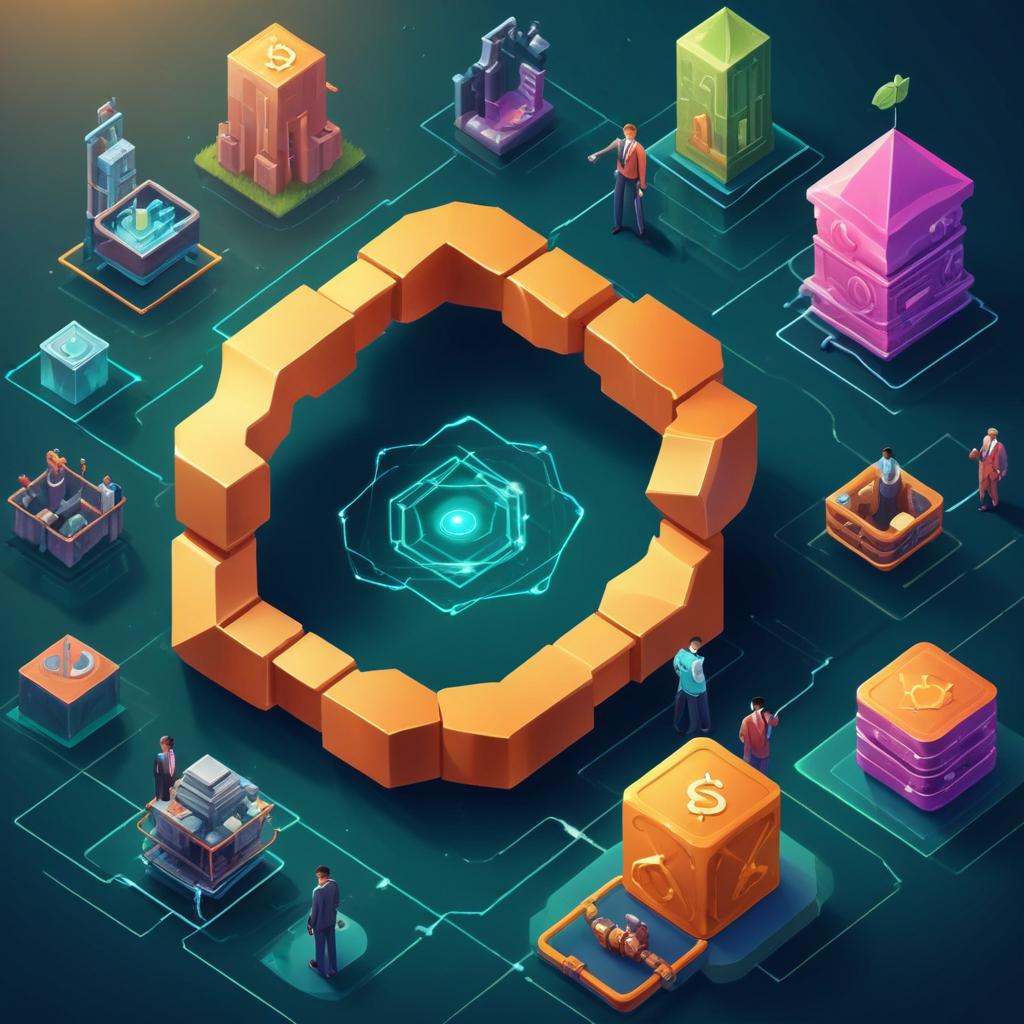
Gaming’s Ledger: How Blockchain Reinvented Virtual Economies by 2025
Gaming’s Ledger: How Blockchain Reinvented Virtual Economies by 2025
The convergence of blockchain technology and the gaming industry has matured significantly by 2025, moving far beyond the initial hype surrounding simple NFT implementations. What started as experiments with play-to-earn models has evolved into a sophisticated ecosystem where blockchain is deeply integrated into the very fabric of game design, ownership, and economic structures. This article examines the key advancements and impacts of this integration, evaluating its successes and ongoing challenges.
One of the most profound changes brought about by blockchain is the shift in ownership paradigms. Traditionally, in-game assets existed solely within the confines of a specific game, controlled entirely by the game developer. Now, thanks to Non-Fungible Tokens (NFTs) and advanced smart contract implementations, players genuinely own their in-game items. This ownership extends beyond a single game, enabling interoperability and creating a more dynamic and player-centric economy.
Beyond Simple NFTs: Sophisticated Tokenomics
The initial wave of blockchain games often relied on rudimentary NFT implementations, representing simple cosmetic items or collectibles. By 2025, however, sophisticated tokenomics are the norm. We see complex systems where NFTs represent:
- Dynamic Assets: NFTs that evolve based on player actions or in-game events. For example, a weapon might gain experience and increase its stats based on how effectively a player uses it.
- Fractionalized Ownership: High-value assets, like rare land plots in a metaverse game, are fractionalized into smaller, more affordable tokens, allowing a wider range of players to participate in ownership.
- Utility Tokens: Tokens that provide access to specific game features, governance rights, or exclusive content. These tokens often fuel decentralized autonomous organizations (DAOs) that influence game development.
Interoperability: The Holy Grail Achieved?
While complete interoperability across all games remains a distant dream, significant strides have been made. Standardized NFT metadata formats, such as the widely adopted ERC-721e and ERC-1155+, now facilitate smoother transfer of assets between games built on compatible blockchains. Meta-games are also emerging, acting as hubs where players can display and utilize their assets from various games, creating a unified metaverse experience. However, issues surrounding balancing assets designed for different game mechanics remain a significant challenge.
The Evolution of Play-to-Earn (P2E) and its New Iterations
The initial P2E model, while promising, faced criticism for its unsustainable tokenomics and its tendency to attract players primarily motivated by financial gain rather than genuine enjoyment. By 2025, P2E has evolved into more sustainable and engaging models, focused on rewarding skill, contribution, and community participation.
Play-and-Own (PAO) and Play-to-Contribute (P2C)
The industry is seeing a shift towards “Play-and-Own” (PAO) and “Play-to-Contribute” (P2C) models. PAO emphasizes earning through skillful gameplay and strategic decision-making, while P2C rewards players for contributing to the game’s ecosystem through content creation, community moderation, and bug reporting. These models aim to attract a broader audience by prioritizing fun and engagement over solely financial incentives.
DAO-Driven Game Development
Decentralized Autonomous Organizations (DAOs) are playing an increasingly important role in game development. Players who hold governance tokens can vote on key decisions, such as new features, balancing changes, and even the overall direction of the game. This fosters a sense of ownership and empowers the community to shape the game they play. However, managing these DAOs effectively and ensuring fair representation of diverse player interests remains a complex process.
Blockchain’s Impact on Game Development
Blockchain integration has also profoundly impacted the way games are developed and funded. The shift towards decentralized models has opened up new avenues for independent developers and fostered greater transparency in the development process.
Decentralized Funding and Crowdfunding
Initial Game Offerings (IGOs) and tokenized crowdfunding campaigns have become a popular alternative to traditional venture capital funding. These models allow developers to raise capital directly from the community, fostering a stronger connection between developers and players. However, robust due diligence and regulatory frameworks are crucial to protect investors from fraudulent projects.
Modular Game Development and Open-Source Frameworks
Blockchain is facilitating the rise of modular game development, where developers can create and share reusable game components as NFTs. This allows for faster development cycles and encourages collaboration within the gaming community. Open-source blockchain gaming frameworks are also becoming increasingly prevalent, providing developers with the tools and resources they need to build decentralized games.
Challenges and Future Directions
Despite the significant advancements, blockchain gaming still faces several challenges:
Scalability and Transaction Fees
Blockchain scalability remains a bottleneck for many games, especially those requiring high transaction throughput. Layer-2 scaling solutions, such as sidechains and rollups, are gaining traction but still require further optimization. High transaction fees can also deter players from actively participating in the game’s economy. The development of more efficient and cost-effective blockchain technologies is crucial for the widespread adoption of blockchain gaming.
Security and Smart Contract Audits
Smart contract vulnerabilities can lead to significant financial losses and erode player trust. Rigorous security audits and formal verification methods are essential to ensure the integrity of blockchain games. The industry is seeing increased investment in security infrastructure and the development of standardized security protocols.
Regulatory Uncertainty
The regulatory landscape surrounding blockchain gaming remains unclear in many jurisdictions. This uncertainty can hinder innovation and discourage investment. Clear and consistent regulatory frameworks are needed to provide a stable environment for the growth of the blockchain gaming industry.
The Need for Engaging Gameplay
Ultimately, the success of blockchain gaming hinges on creating fun and engaging gameplay experiences. Many early blockchain games prioritized financial incentives over gameplay, resulting in unsustainable models. Developers must focus on designing games that are enjoyable to play, regardless of the blockchain integration. The focus needs to be on creating compelling games that to leverage blockchain, rather than blockchain projects that to be games.
Conclusion
By 2025, blockchain has moved from being a novelty to an integral part of the gaming landscape. While challenges remain, the potential for increased player ownership, innovative economic models, and decentralized development is undeniable. The future of gaming is undoubtedly intertwined with blockchain technology, and the industry is poised for further innovation and growth in the years to come.
You Might Also Like
- The Ubiquitous Nature of Crossplay in Core Genres
- Revolutionizing Marketing with AI
- The Rise of Personalized & Adaptive Microlearning
- The Terahertz Frontier: Riding the Wave of Unprecedented Bandwidth
- The Shifting Sands of AI Risk: A 2025 Perspective
Frequently Asked Questions (FAQ)
What are decentralized assets?
Decentralized assets are digital or physical assets whose ownership and management are distributed across a network, often using blockchain technology, rather than being controlled by a central authority.
Why is decentralized asset ownership gaining popularity?
It offers increased transparency, security, and accessibility compared to traditional ownership models, potentially lowering costs and empowering individuals.
What are some examples of decentralized asset ownership?
Examples include tokenized real estate, fractional ownership of art, and decentralized autonomous organizations (DAOs) owning digital collectibles or intellectual property.


